Blog · Nutrition
How to track calories and macros without obsessing
A beginner's guide to counting calories and macros: what the numbers mean, what to track first, and when close enough is fine.
Tracking food has a reputation for being tedious. It does not need to be. A few minutes a day is enough to learn what you actually eat, and that is the whole point.
What the numbers mean
Calories measure energy. Macros are the three nutrients that supply it: protein and carbohydrate provide 4 kcal per gram, and fat provides 9. A food's calories are the sum of its macros, which is why you cannot change one without changing the other.
What to track first
- Calories, because they decide whether your weight goes up, down or stays put over time.
- Protein, because it supports muscle while you train.
Carbohydrate and fat fill the rest. Unless you have a specific reason, you do not need to hit them exactly.
Make logging quick
- Scan packaged food instead of searching for it.
- Reuse meals you eat often.
- For home cooking, log the main ingredients. The pinch of salt does not matter.
- When eating out, log your best estimate and move on.
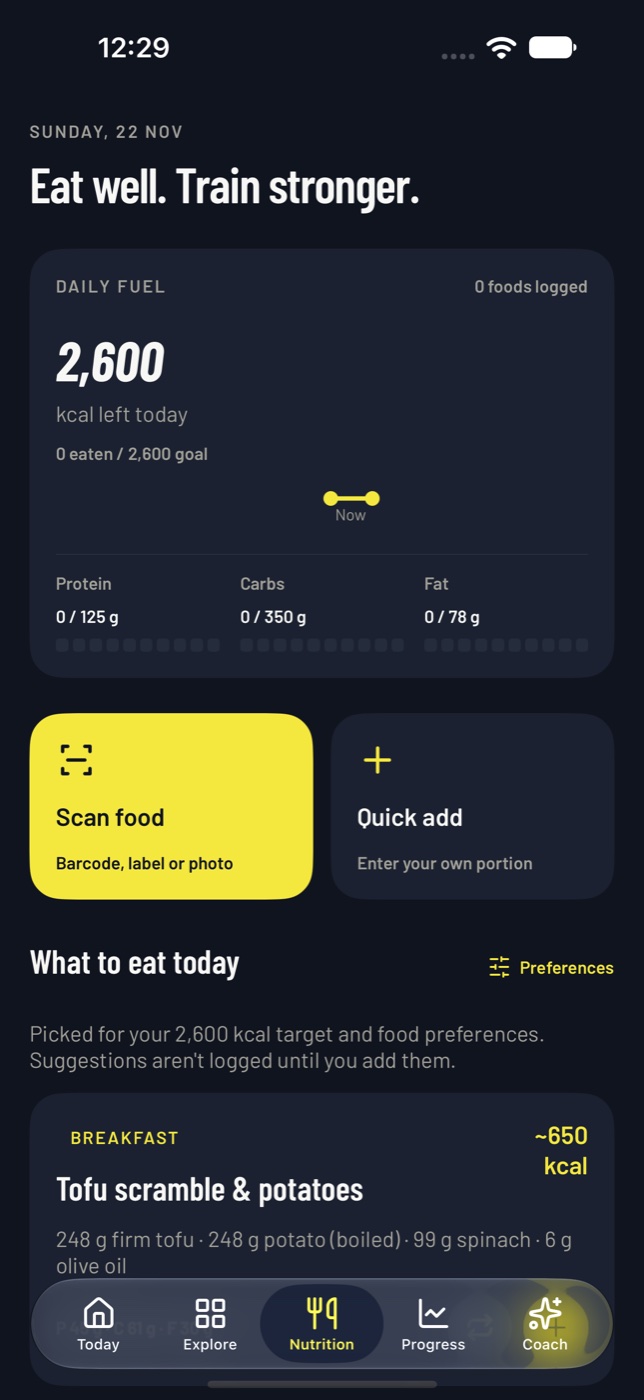
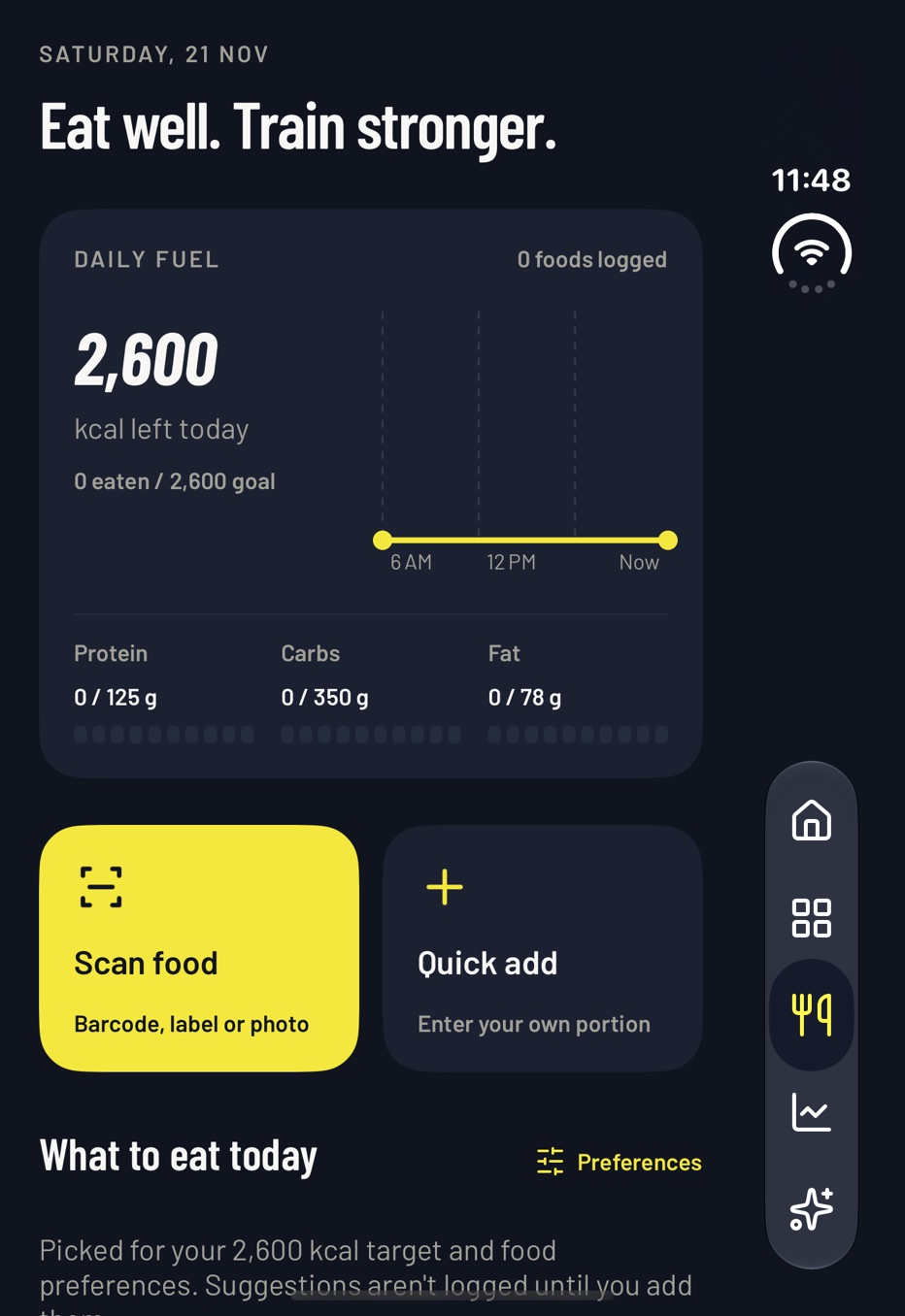
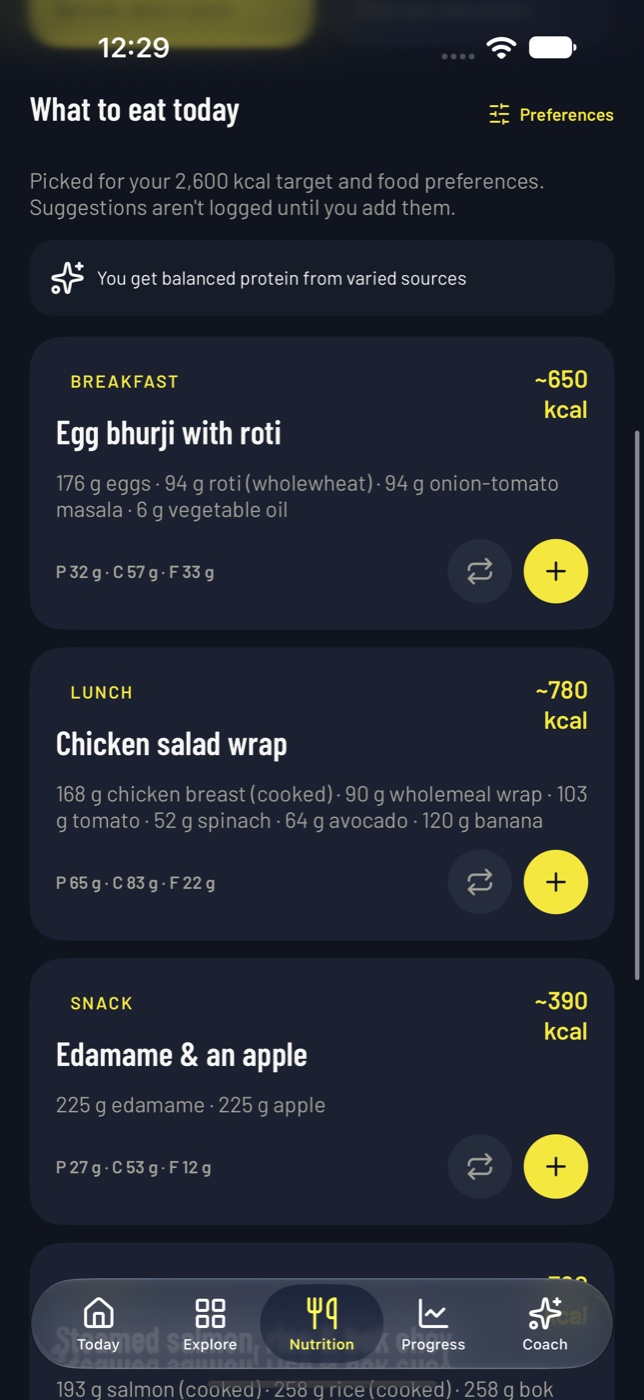
BarbellFit's Nutrition tab shows calories left for the day and where you are on protein, carbohydrate and fat. You can scan a barcode, a nutrition label or a photo of the meal, and you always review the portion before it is saved. Estimates from photos are labelled as estimates.
When to stop tracking
Tracking is a learning tool, and you do not have to do it for ever. If counting starts to cause stress, or you have a history of disordered eating, skip it and speak to a doctor or dietitian instead. Avoid crash diets.
Common questions
Do I need to weigh my food?
Not for ever. Weighing a few common foods for a while teaches you what a portion looks like, and estimates are fine after that.
Which macro matters most?
For people who lift, protein. Get calories and protein right and let carbohydrate and fat fill the remainder.
How accurate are calorie counts?
They are estimates. Being consistent matters more than being exact.
Sources
This article is general information, not medical advice. Check with a healthcare professional before changing your training or diet, especially if you have an injury or a medical condition.