Blog · Nutrition
Roti or rice for fat loss? Calories in everyday Indian food
Two medium rotis and one katori of rice have about the same calories. What decides fat loss is the total, and most of the surprise is in the oil and ghee.
Should you give up rice? Switch to roti? Eat only at lunch? It is one of the most repeated questions among Indians trying to lose weight, and the honest answer is that it matters far less than people think.
The numbers
These are approximate, worked out from the Indian Food Composition Tables values for atta and rice.
- One medium roti (about 30 g atta, no ghee): about 100 kcal, 3 g protein
- One katori cooked white rice (about 150 g): about 190 to 200 kcal, 4 g protein
- One teaspoon ghee (5 g): about 45 kcal
- One tablespoon cooking oil: about 120 kcal
- One teaspoon sugar: about 20 kcal
So two rotis and one katori of rice are close to the same thing in calories. Roti made from whole wheat atta has more fibre, which some people find more filling. Rice is easier to overeat because it is easy to serve a large portion. Those are the real differences.
What decides fat loss
You lose fat when you eat fewer calories than you use, over weeks. You can do that with rice, with roti, or with both. Cutting out one food works only when it happens to lower your total.
A sensible pace is about 0.5 to 1 percent of your body weight a week. Faster than that and you are more likely to lose muscle along with fat, especially if protein is low. See how to get enough protein on an Indian vegetarian diet.
Where the calories hide
- Oil and ghee. A sabzi cooked with three tablespoons of oil carries about 360 kcal from the oil alone, before you count the vegetables.
- Ghee on rotis. A teaspoon on each of four rotis is about 180 kcal.
- Chai. Three cups a day with two teaspoons of sugar each is about 120 kcal from sugar, plus the milk.
- Fried snacks and sweets. A single samosa can be 250 kcal or more.
How to count home food
Home-cooked food has no label, which is why people give up on tracking. Two habits make it workable:
- Weigh the atta and the raw rice once, so you know what your usual roti and your usual katori actually are.
- Measure the oil that goes into the pan for the whole dish, and divide by the number of servings.
After a week or two you will know your regular meals well enough to estimate them. Our guide to tracking calories and macros without obsessing covers how accurate you need to be.
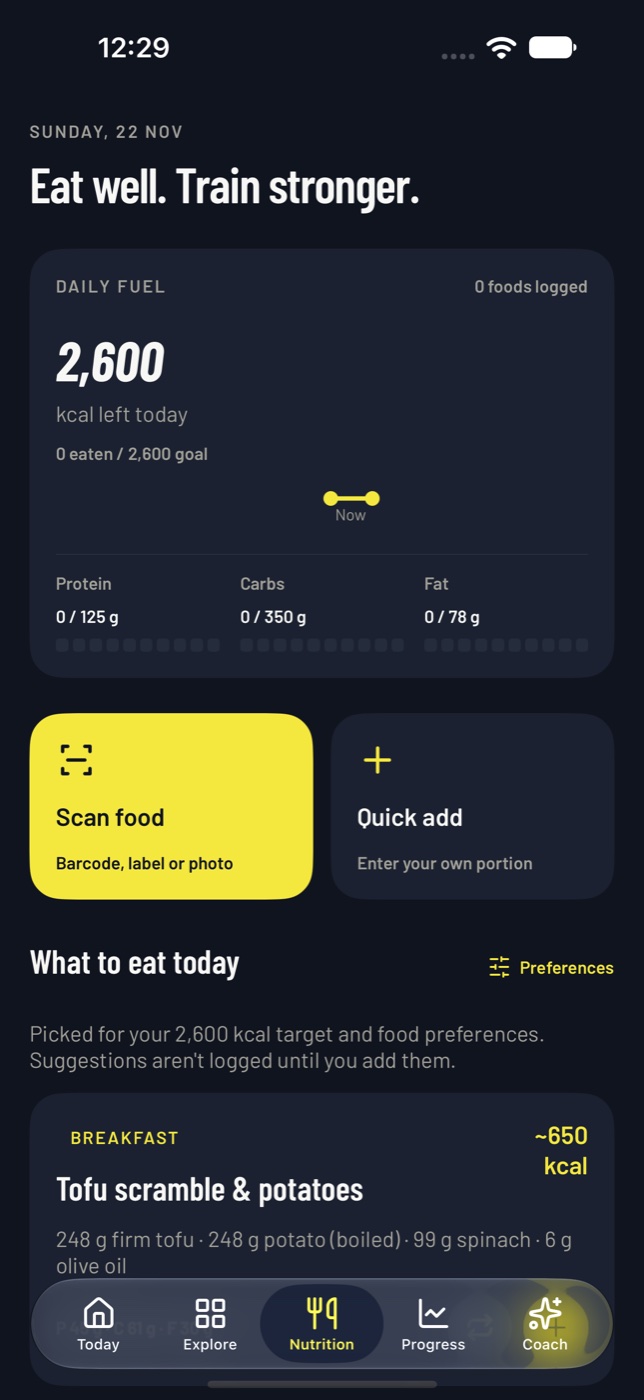
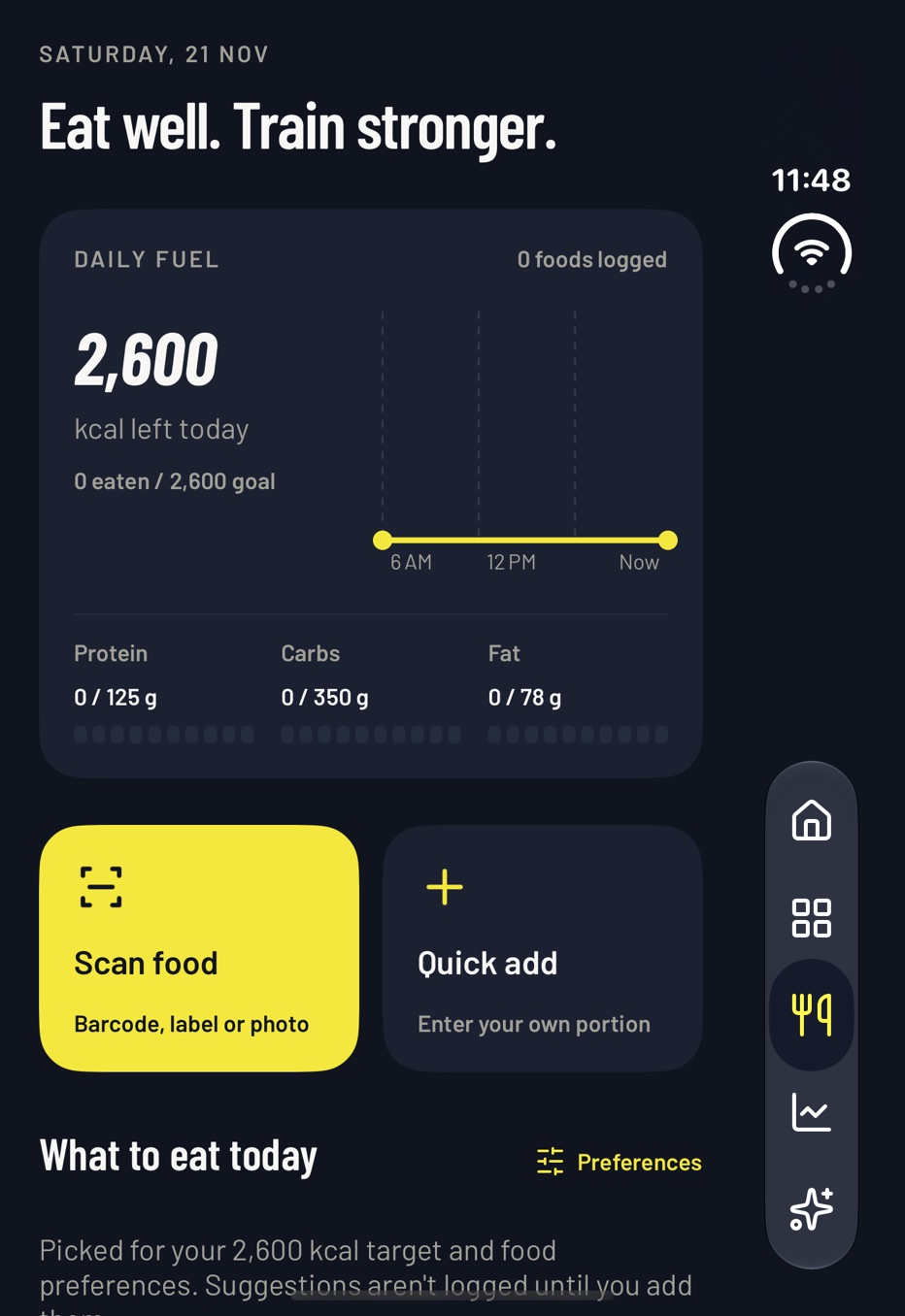
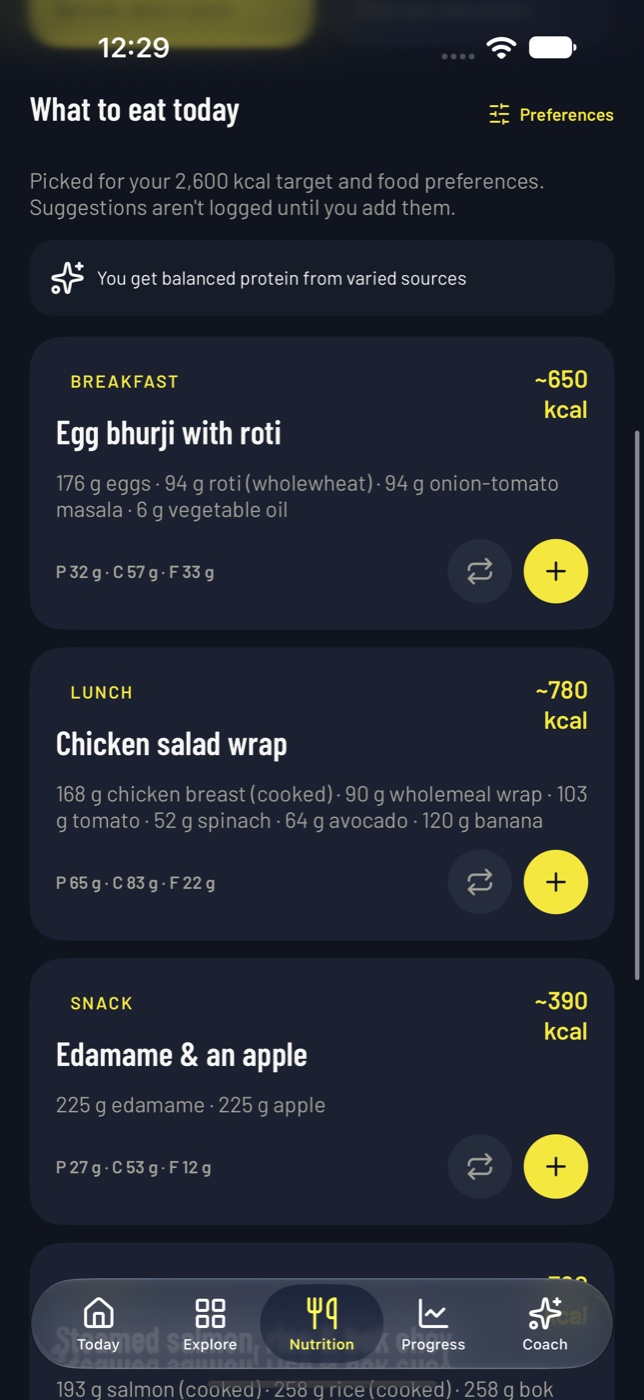
BarbellFit sets a calorie target from your setup answers. For a fat-loss goal it sits about 20 percent below your estimated maintenance. Packaged foods can be scanned by barcode or label, and for home-cooked food you enter your own portion with Quick add.
Common questions
How many calories are in one roti?
A medium roti made from about 30 g of whole wheat atta, without ghee, has about 100 kcal. A small thin phulka has less, and a large or ghee-coated roti has more.
How many calories are in a bowl of rice?
One katori of cooked white rice, about 150 g, has about 190 to 200 kcal. Cooked rice is roughly 130 kcal per 100 g.
Is brown rice better than white rice for weight loss?
The calories are almost the same. Brown rice has more fibre, which may keep you full a little longer, but swapping one for the other will not change your weight much on its own.
Should I stop eating rice at night?
There is no need. The time you eat rice does not change how many calories it has. What matters is your total for the day.
How many rotis should I eat in a day to lose weight?
There is no fixed number. It depends on your calorie target and what else is on your plate. Work out your target first, then fit rotis, rice and everything else inside it.
Sources
This article is general information, not medical advice. Check with a healthcare professional before changing your training or diet, especially if you have an injury or a medical condition.