Blog · Nutrition
How to get 100 g of protein a day on an Indian vegetarian diet
Dal and roti alone will not get you there. Here is how much protein Indian vegetarian foods really have, and a sample day that reaches about 100 g.
Ask any Indian fitness forum how to eat enough protein without meat and the same problem comes up: the usual plate of roti, rice, sabzi and dal is mostly carbohydrate. The fix is not exotic food. It is knowing which everyday foods carry protein and putting one in every meal.
How much do you need?
The ICMR-NIN recommended allowance for Indian adults is 0.83 g of protein per kg of body weight a day. That is the amount that covers basic needs. For people who lift, the International Society of Sports Nutrition puts the range at 1.4 to 2.0 g per kg. For a 60 kg person that is 84 to 120 g a day, and for 70 kg it is 98 to 140 g. Our article on how much protein you need to build muscle goes through the numbers.
Protein in common Indian vegetarian foods
These are approximate values, taken from the Indian Food Composition Tables and from pack labels. Brands and recipes vary, so check the label where there is one.
- Soya chunks, 50 g dry: about 26 g
- Paneer, 100 g: about 18 g
- Toned milk, 500 ml: about 15 g
- Besan, 60 g (two chillas): about 13 g
- Roasted chana, 50 g: about 10 g
- Rajma or chole, 50 g dry: about 10 g
- Peanuts, 30 g: about 8 g
- Curd, 200 g: about 7 g
- Cooked dal, one katori: roughly 6 to 9 g, depending on how thick it is
- Roti, one medium: about 3 g
If you eat eggs, one egg adds about 6 g.
A sample day that reaches about 100 g
- Breakfast: two besan chillas with 100 g curd. About 16 g.
- Lunch: two rotis, one katori dal, 100 g paneer in the sabzi. About 31 g.
- Evening: 50 g roasted chana and a glass of milk (250 ml). About 18 g.
- Dinner: soya chunk curry made with 50 g dry chunks, one katori rice, 100 g curd. About 33 g.
That comes to roughly 98 g. Notice what did the work: paneer, soya, milk, curd, besan and chana. Dal, roti and rice added about 17 g between them.
In a hostel or PG
You cannot change the mess menu, but you can add to it. Milk, curd, roasted chana and peanuts need no cooking. Soya chunks only need boiling water and ten minutes. Ask for an extra katori of dal, and take the paneer or chole dish when it is served.
Watch the calories that come along
Paneer and peanuts are high in fat, so they are high in calories too. If you are trying to lose fat, lean more on soya chunks, low-fat curd, toned milk and dal, and keep paneer portions measured.
Keeping count
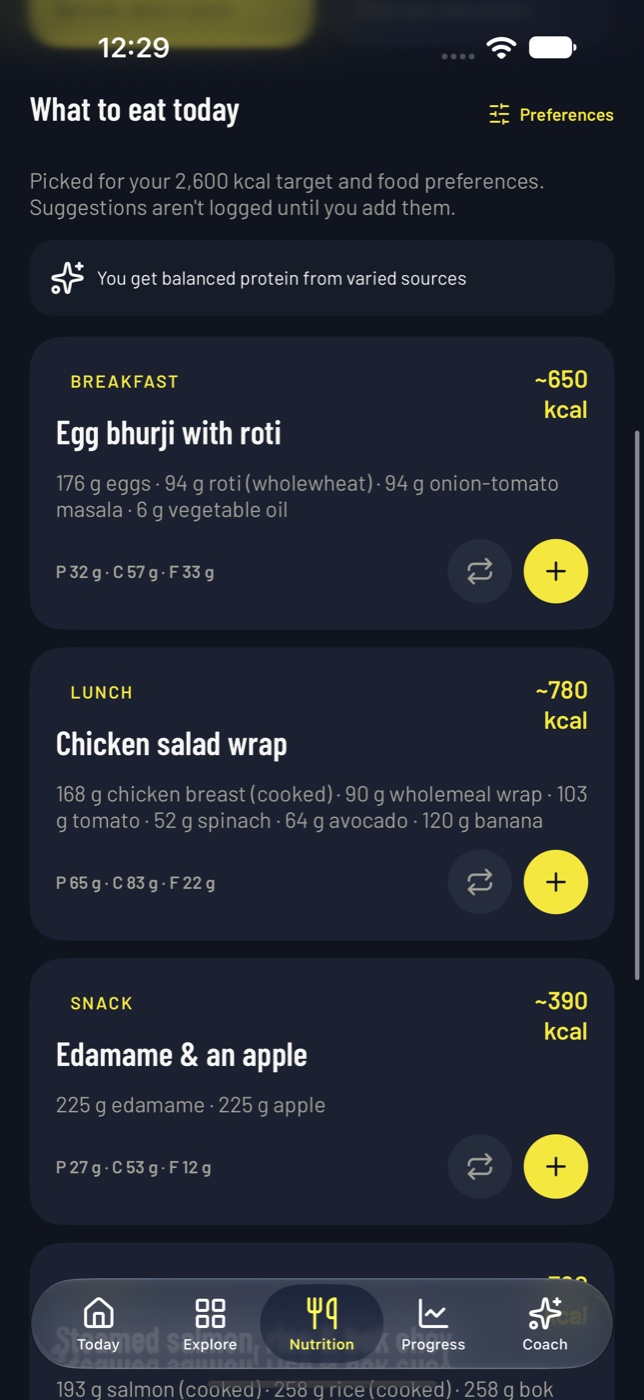
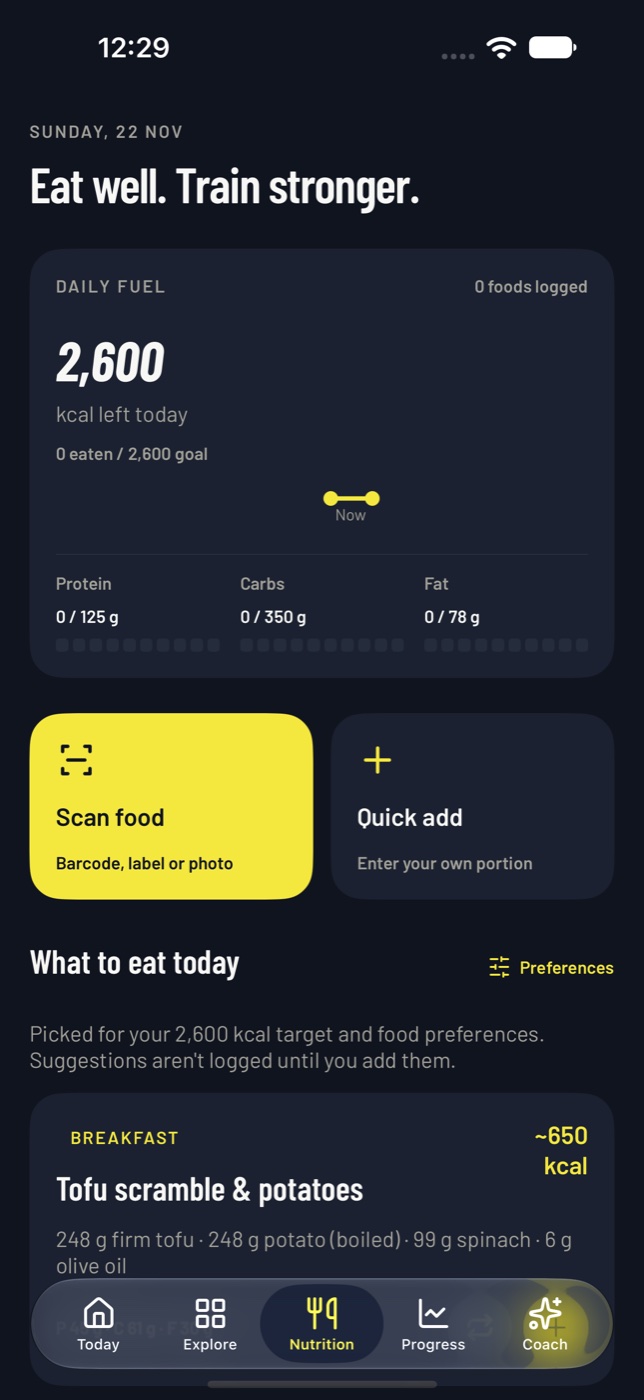
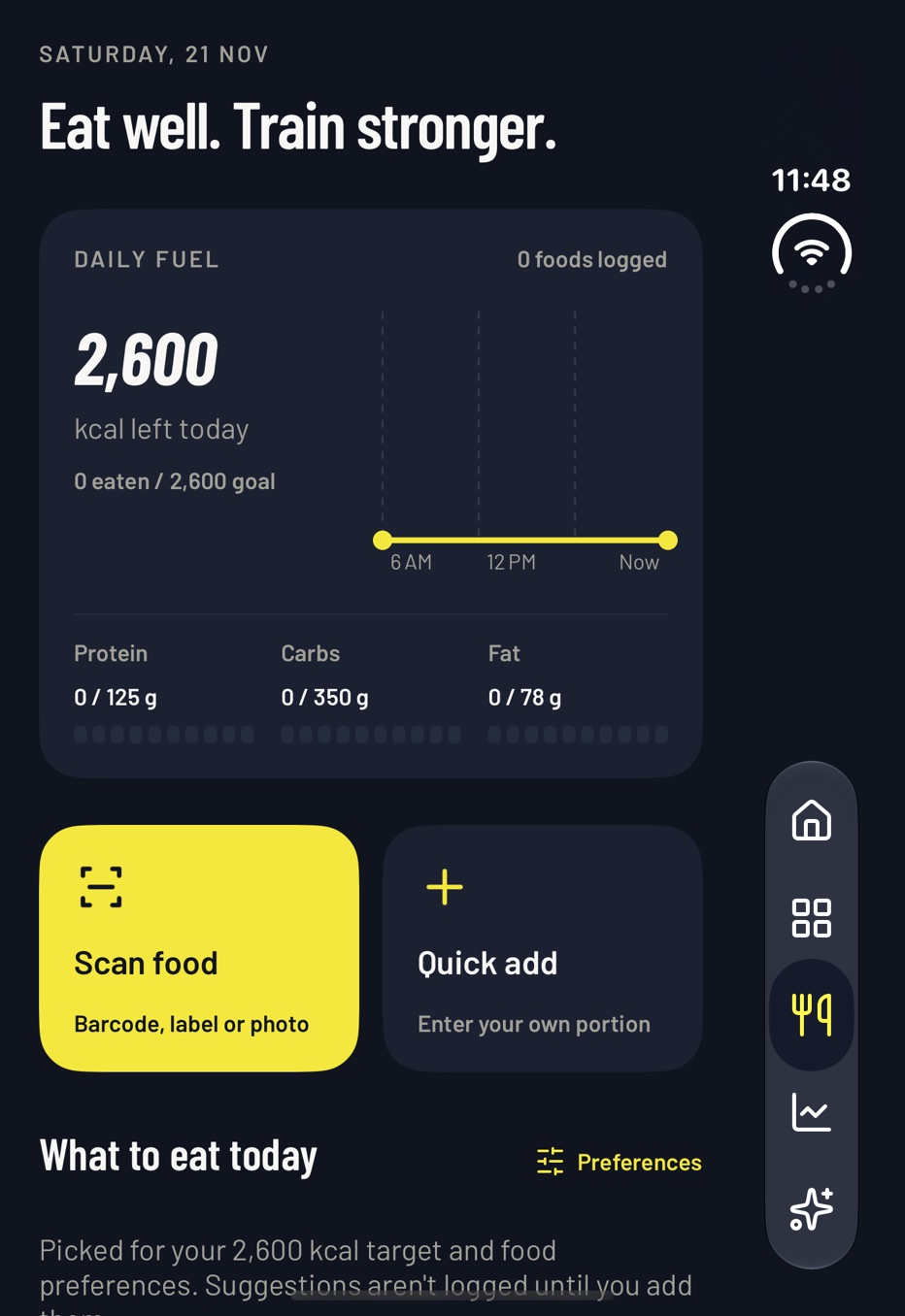
You do not need to track forever, but a week of logging shows you where your day falls short. BarbellFit sets a protein target during setup, lets you choose a vegetarian or plant-based preference for its suggested meals, and shows what is left on the Nutrition tab. You can scan the barcode or the nutrition label on a pack, or enter your own portion.
Common questions
Is dal a good source of protein?
It contributes, but less than most people think. A katori of cooked dal has roughly 6 to 9 g of protein, so you would need a lot of it to reach a training-level target. Use it alongside denser sources such as paneer, soya chunks, milk and curd.
How much protein is in 100 g of paneer?
About 18 g, with roughly 20 g of fat. It is a good source, but the calories add up, so measure the portion if you are losing fat.
How much protein do soya chunks have?
About 50 g per 100 g dry, going by pack labels. They absorb water when cooked, so a cooked bowl has far less per 100 g. Count the dry weight you put in the pan.
Do soya chunks lower testosterone in men?
A 2021 meta-analysis of clinical studies found that soy protein and soy isoflavones did not change testosterone levels in men. Normal food portions are not a concern for most people.
Can I build muscle without whey protein?
Yes. Whey is a convenient food, not a requirement. What matters is your total protein for the day, and it can come entirely from regular food.
Sources
- ICMR-National Institute of Nutrition (2020). Nutrient Requirements for Indians: Recommended Dietary Allowances and Estimated Average Requirements.
- Longvah et al. (2017). Indian Food Composition Tables. National Institute of Nutrition.
- Jäger et al. (2017). International Society of Sports Nutrition position stand: protein and exercise.
- Reed et al. (2021). Neither soy nor isoflavone intake affects male reproductive hormones: an expanded and updated meta-analysis of clinical studies. Reproductive Toxicology.
This article is general information, not medical advice. Check with a healthcare professional before changing your training or diet, especially if you have an injury or a medical condition.