Blog · Training
Skinny fat: should you bulk, cut or recomp?
Thin arms, soft belly, normal weight. If you are new to lifting, you can build muscle and lose fat at the same time. Here is how to set it up.
Your weight is normal for your height, but your arms are thin and your stomach is not flat. Bulking sounds like it will make the belly worse. Cutting sounds like it will make you thinner. This is the skinny fat problem, and it is one of the most common posts in Indian fitness forums.
Why it is so common in India
At the same BMI, people of South Asian origin tend to carry more body fat and less muscle than people of European origin. This is why Indian guidelines use lower cut-offs. The consensus statement for Asian Indians counts a BMI of 23 or more as overweight and 25 or more as obese, and flags a waist of 90 cm or more in men and 80 cm or more in women. A normal reading on the scale can hide a lot.
The short answer: recomp first
If you have not been lifting properly for long, you do not have to choose between bulking and cutting. People who are new to training can gain muscle while losing fat. Researchers call it body recomposition, and it is best documented in beginners and in people returning after a break.
The recipe has three parts:
- Lift three days a week and add weight or repetitions over time. See progressive overload.
- Eat enough protein, around 1.6 to 2.0 g per kg of body weight a day.
- Eat at about maintenance, or slightly below it.
When to lean one way
- Waist above the cut-off: use a small deficit, around 10 to 20 percent below maintenance. Keep lifting and keep protein high.
- Waist fine, but you are light for your height: use a small surplus of 200 to 300 kcal. You need the food to grow.
- In between: stay at maintenance and let the training do the work.
What does not work is a hard diet with a lot of cardio and no lifting. You lose weight, some of it muscle, and end up a smaller version of the same shape.
How to tell it is working
During a recomp the scale may hardly move, because you are losing fat and gaining muscle at once. Use other measures:
- Waist measurement, taken at the navel, once a week
- The weights and repetitions in your log
- A photo in the same light once a month
Expect to judge it over three months, not three weeks.
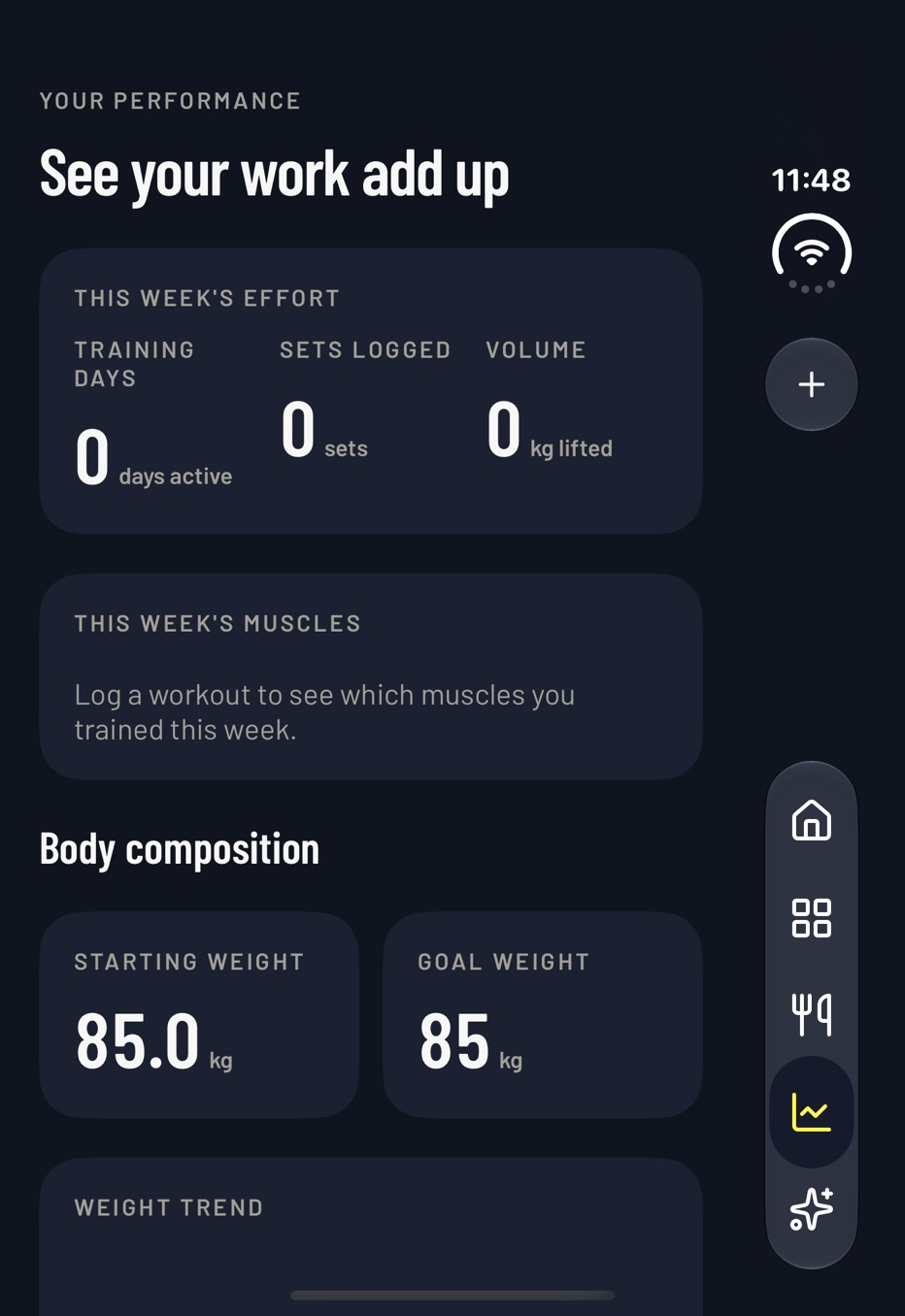
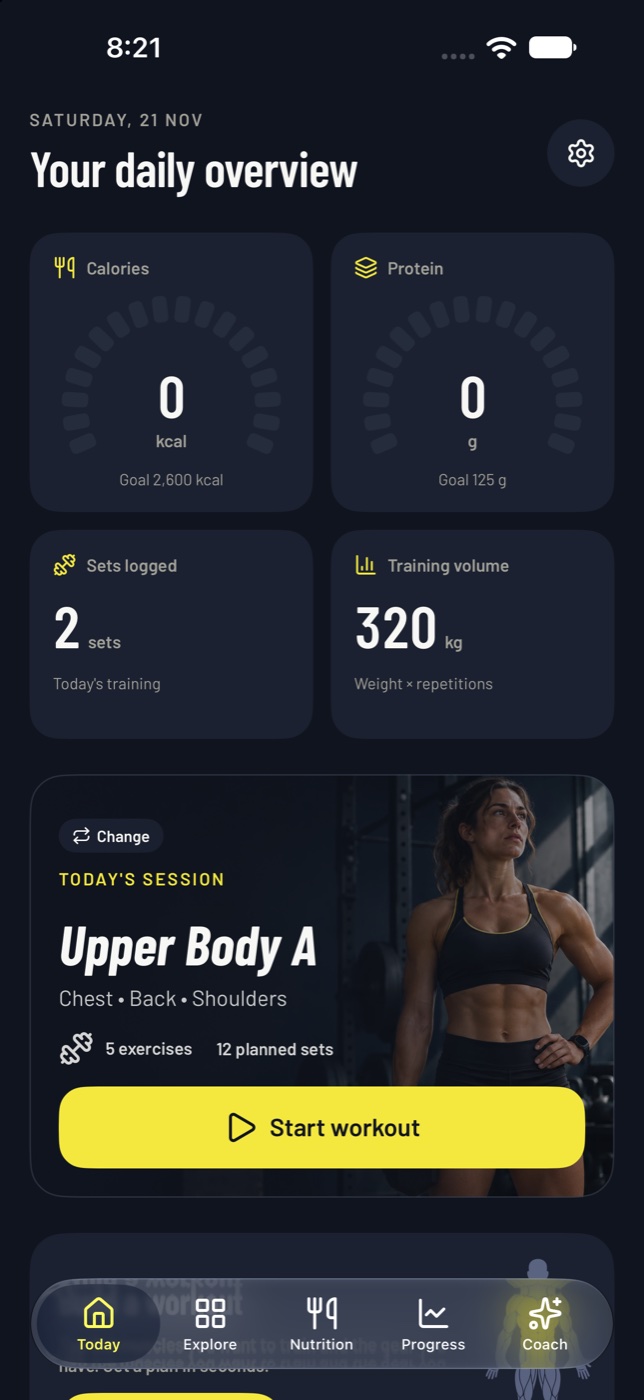
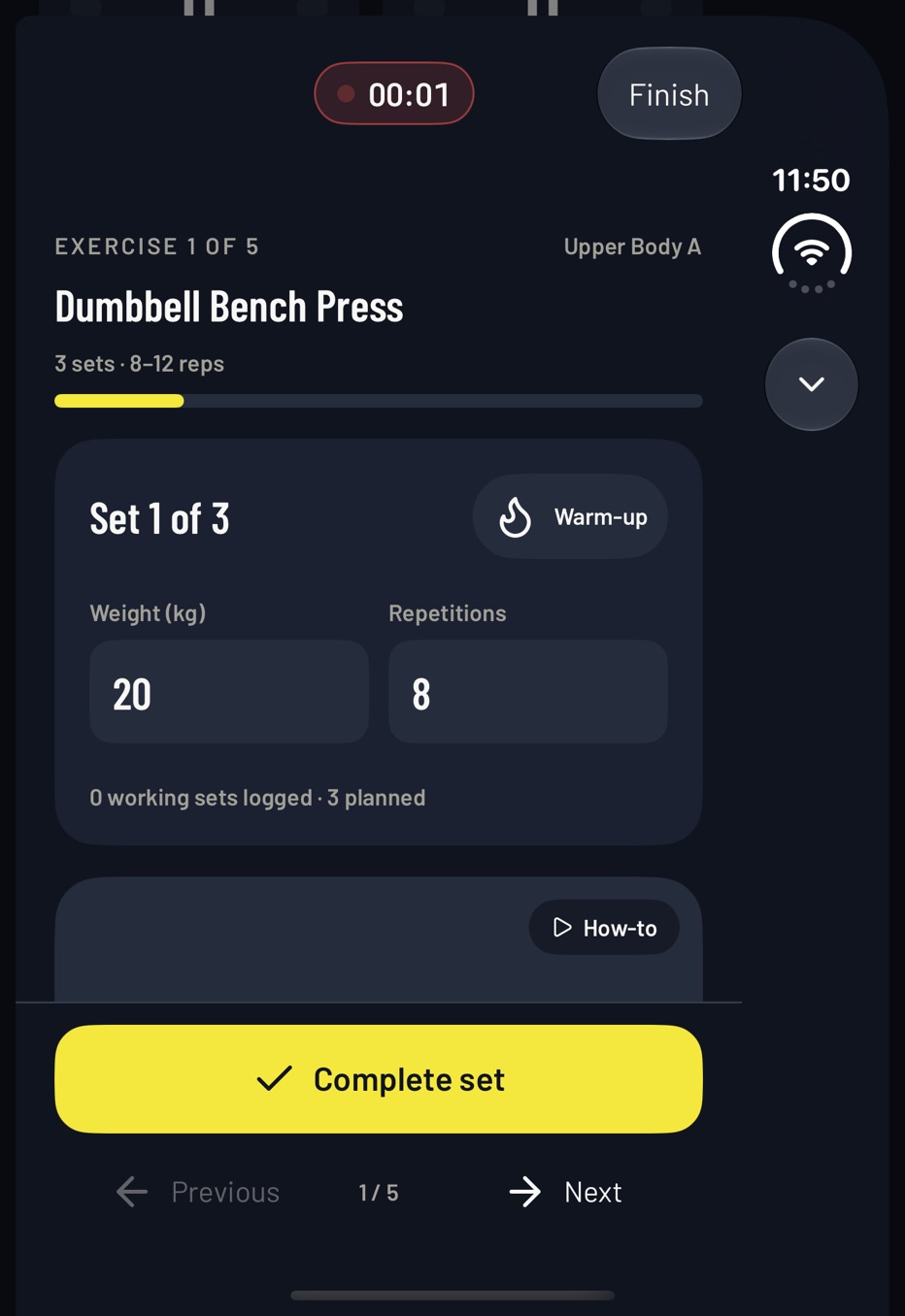
BarbellFit records weight and waist check-ins next to your training log, so the two measures that matter for a recomp sit in one place. Setup asks for your goal and builds the plan and the calorie target from it.
Common questions
Should I bulk or cut if I am skinny fat?
If you are new to lifting, neither. Eat at about maintenance with high protein and lift three days a week. Use a small deficit if your waist is above the healthy cut-off, or a small surplus if you are underweight.
How long does it take to fix skinny fat?
Visible change usually takes a few months of consistent lifting and eating. Check your waist and your lifts monthly instead of the scale daily.
Is cardio or weights better for skinny fat?
Weights. Lifting is what adds the muscle you are missing. Walking and some cardio help your health and calorie balance, but they do not replace lifting.
How much protein should a skinny fat person eat?
Around 1.6 to 2.0 g per kg of body weight a day. For a 65 kg person that is about 105 to 130 g.
What BMI is considered overweight for Indians?
The consensus statement for Asian Indians uses 23 or more for overweight and 25 or more for obesity, lower than the international cut-offs of 25 and 30.
Sources
- Misra et al. (2009). Consensus statement for diagnosis of obesity, abdominal obesity and the metabolic syndrome for Asian Indians and recommendations for physical activity, medical and surgical management. Journal of the Association of Physicians of India.
- WHO Expert Consultation (2004). Appropriate body-mass index for Asian populations and its implications for policy and intervention strategies. The Lancet.
- Barakat et al. (2020). Body recomposition: can trained individuals build muscle and lose fat at the same time? Strength and Conditioning Journal.
- Morton et al. (2018). A systematic review, meta-analysis and meta-regression of the effect of protein supplementation on resistance training-induced gains in muscle mass and strength in healthy adults.
This article is general information, not medical advice. Check with a healthcare professional before changing your training or diet, especially if you have an injury or a medical condition.