Blog · Training
Progressive overload: how to keep getting stronger
Progressive overload means asking a little more of your body over time. Here are the simple ways to do it and how to track it.
If you lift the same weights for the same repetitions month after month, your body has no reason to change. Progressive overload is the fix, and it is simpler than the name suggests.
What it means
As you get stronger, you progress your training by increasing the weight, the repetitions or the number of sets. Guidance from the American College of Sports Medicine lists the same options, along with changing repetition speed and rest periods. You do not need all of them. Pick one at a time.
A method that works for most people
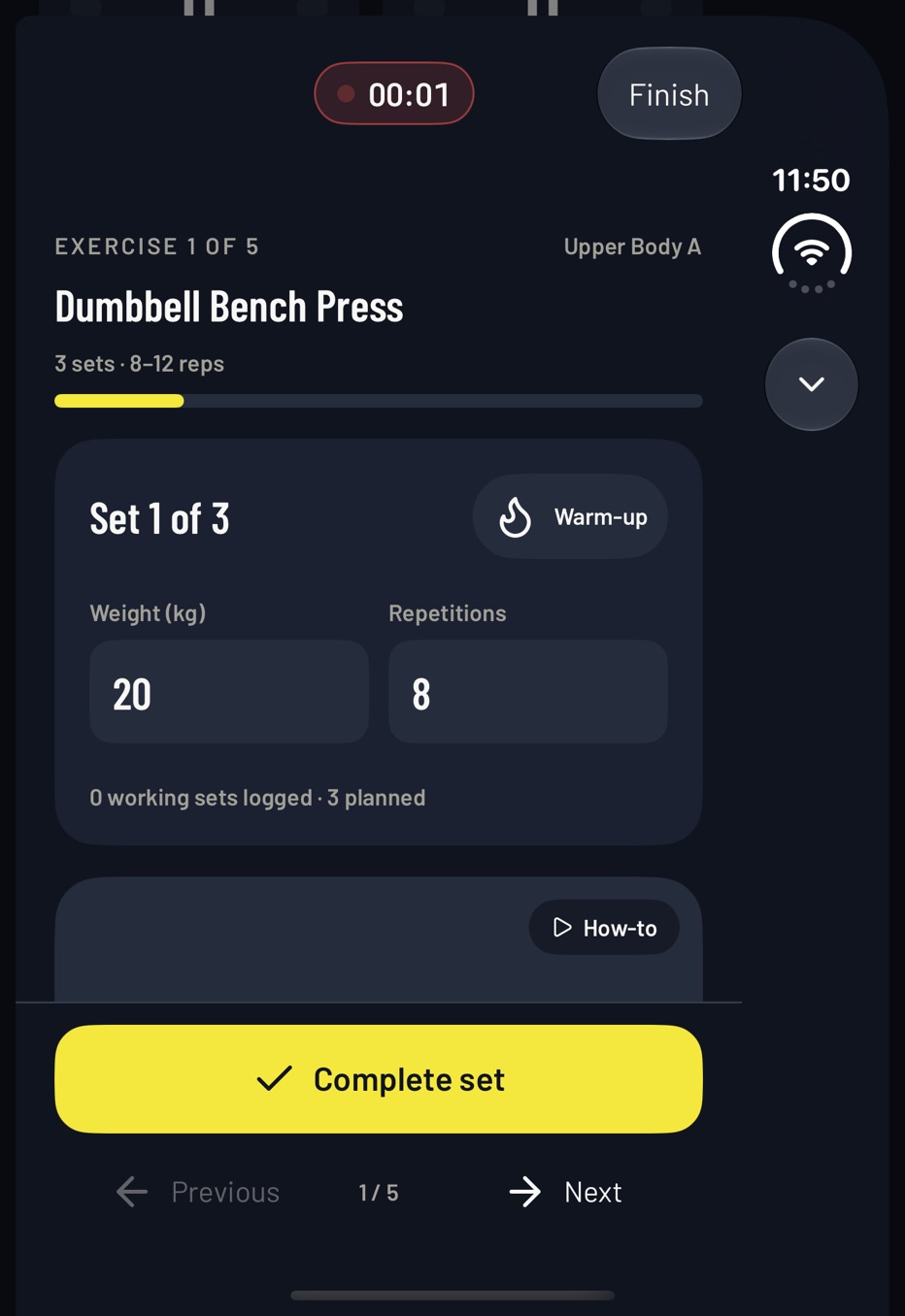
Use a repetition range. Say your plan calls for 3 sets of 8 to 12:
- Choose a weight you can lift for 8 good repetitions on every set.
- Each session, try to add a repetition to one or more sets.
- When you reach 12 on every set, add a small amount of weight and start again at 8.
This is often called double progression. There is always a clear next step, and the jump in weight only comes after you have earned it.
When progress stalls
Everyone stalls. Before changing the programme, check the basics: are you sleeping and eating enough, and are you resting long enough between sets? A week where you repeat the same numbers is normal, not a failure.
Track the right thing
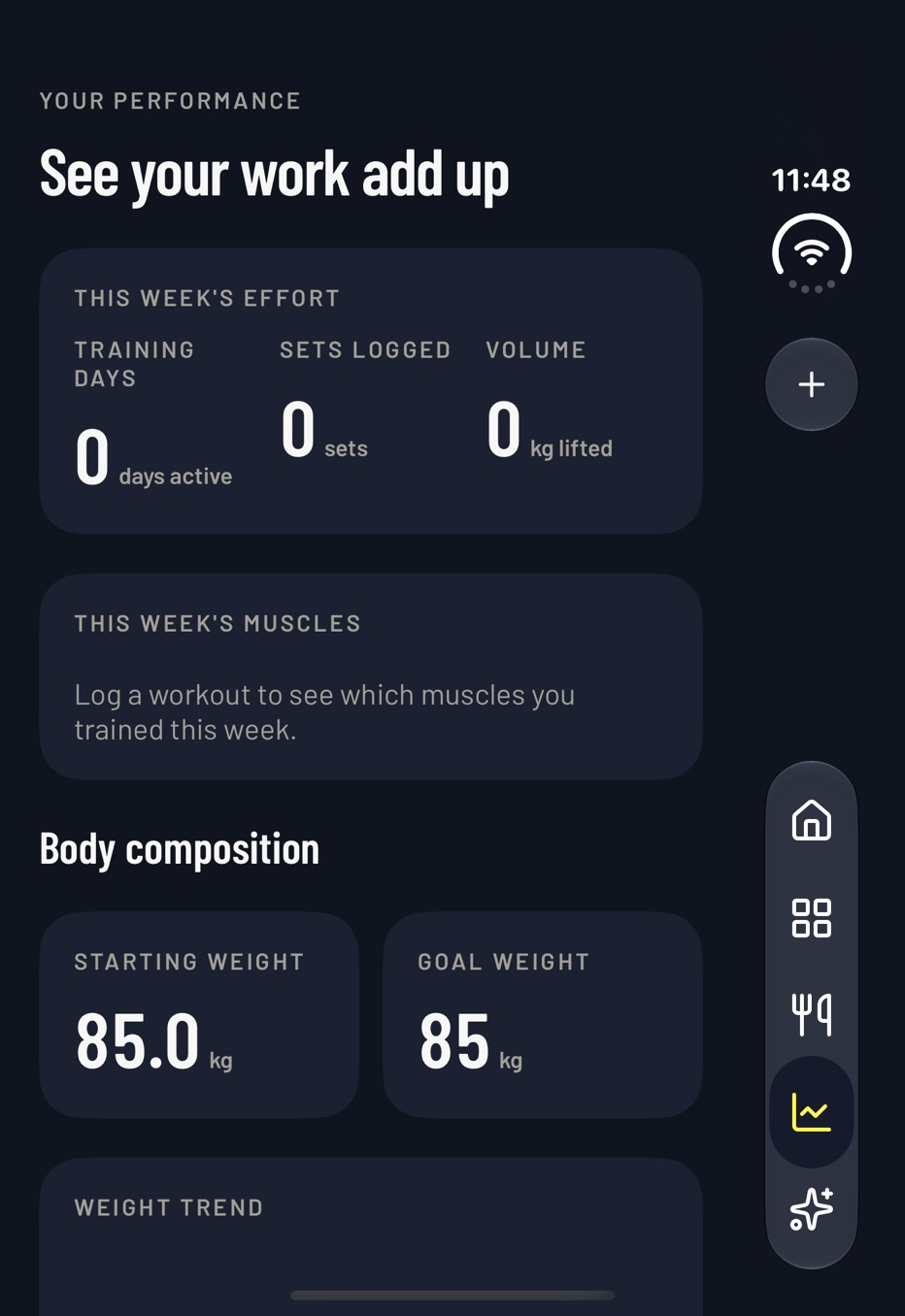
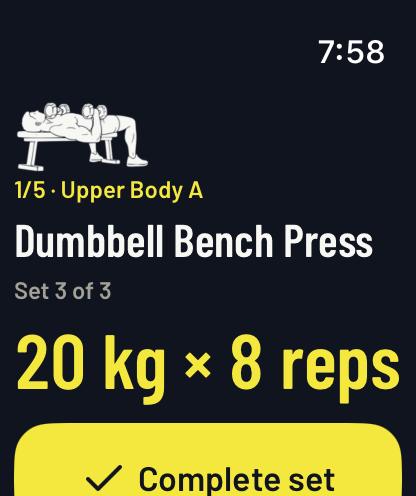
Training volume, weight multiplied by repetitions, is a simple way to see whether you are doing more over time. BarbellFit records the weight and repetitions for every set and shows your sets and volume for the week on the Progress tab, using only what you logged.
Common questions
How often should I add weight?
Add weight when you can complete the top of your repetition range on every set with good form. How often that happens varies, and it slows down with experience.
Is adding repetitions as good as adding weight?
Both are ways of doing more work. Adding repetitions first, then weight, is a reliable way to keep progressing.
What is training volume?
Weight multiplied by repetitions, added up across your sets. It is a simple measure of how much work you did.
Sources
This article is general information, not medical advice. Check with a healthcare professional before changing your training or diet, especially if you have an injury or a medical condition.