Blog · Training
Can you build muscle at home without a gym?
Yes, if the sets are hard enough and keep getting harder. Here is a three-day home routine and how to progress it without weights.
No gym nearby, no time to travel, or no wish to pay for a membership you may not use. The question is whether training at home is worth doing. It is.
What the research says
Studies comparing light and heavy loads find that both build muscle when sets are taken close to failure. Heavy loads are better for building maximum strength, but for muscle size the effort of the set matters more than the weight on the bar. A push-up you can only do eight times is a real training set.
A three-day routine
Do this on three non-consecutive days. Rest one to two minutes between sets and stop each set when you have one or two good repetitions left.
- Push-ups: 3 sets. Hands on a chair if the floor is too hard, feet on a chair if it is too easy.
- Split squats: 3 sets each leg.
- Rows: 3 sets. Use a resistance band, or lie under a sturdy table and pull your chest up to it.
- Pike push-ups: 2 sets, for the shoulders.
- Glute bridges: 2 sets, one leg at a time when two becomes easy.
- Plank: 2 holds.
How to keep progressing
This is where most home routines stall. Doing the same twenty push-ups for a year is practice, not training. Use the same rule as in a gym, progressive overload:
- Add repetitions until you reach about 15 to 20 in a set.
- Then move to a harder version: decline push-ups, Bulgarian split squats, single-leg bridges.
- Or add load: a backpack with books or water bottles.
- Slow the lowering part of each repetition to three seconds.
The limits
Pulling movements are hard to do with nothing. A resistance band and a doorway pull-up bar are inexpensive and solve it. Legs get strong quickly and will outgrow bodyweight squats, so single-leg work and a loaded backpack become necessary. If you later join a gym, nothing you built at home is wasted.
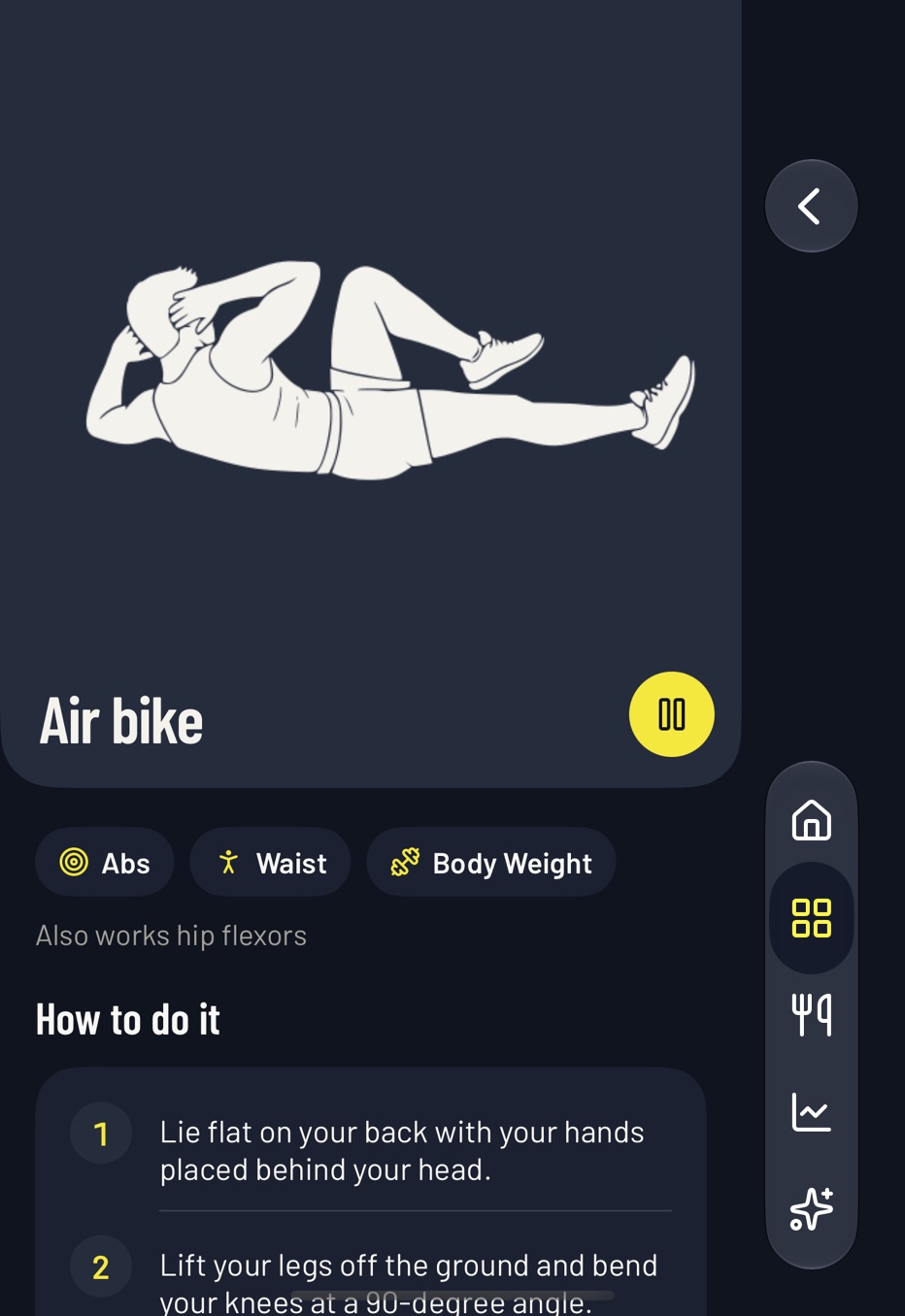
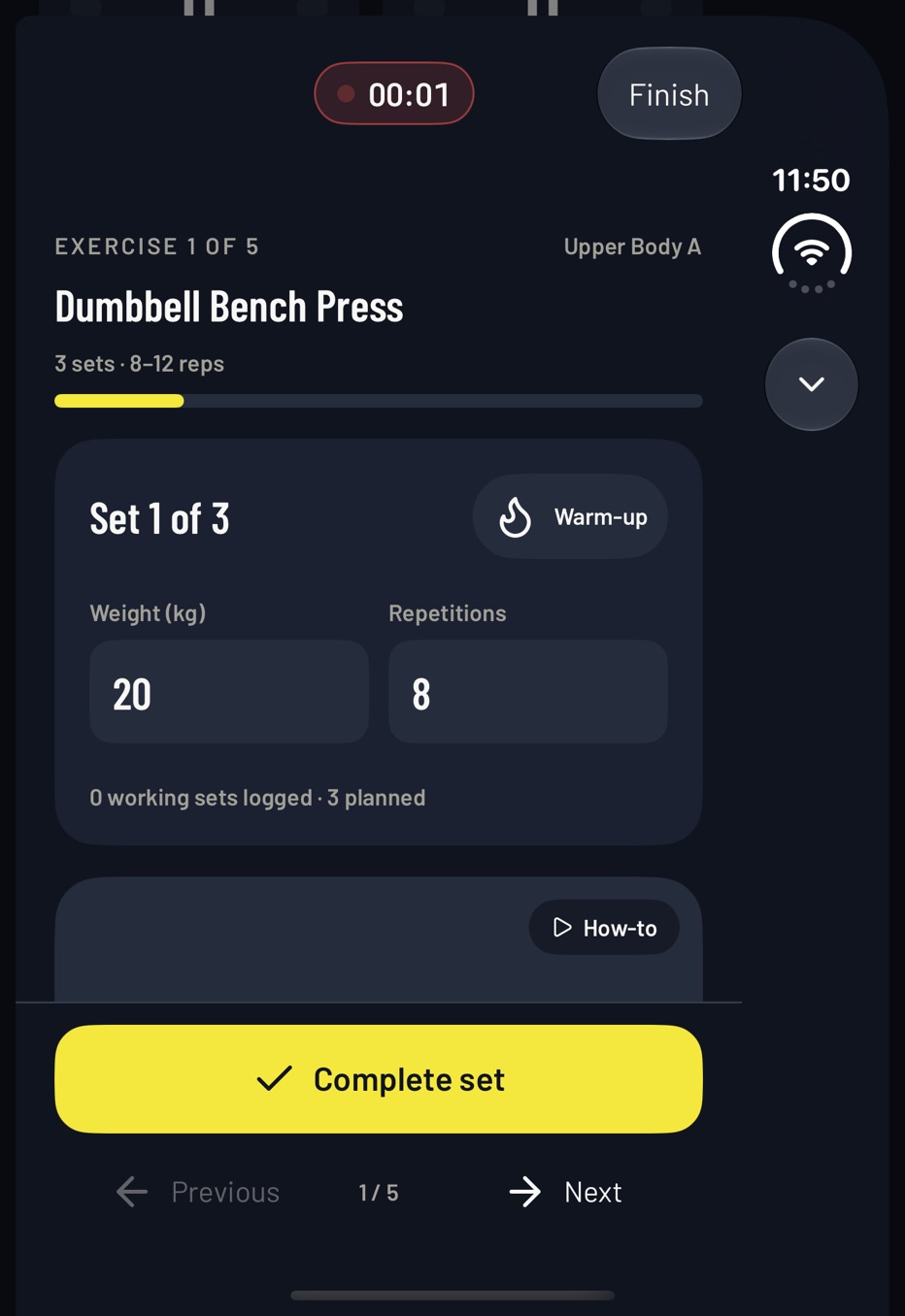
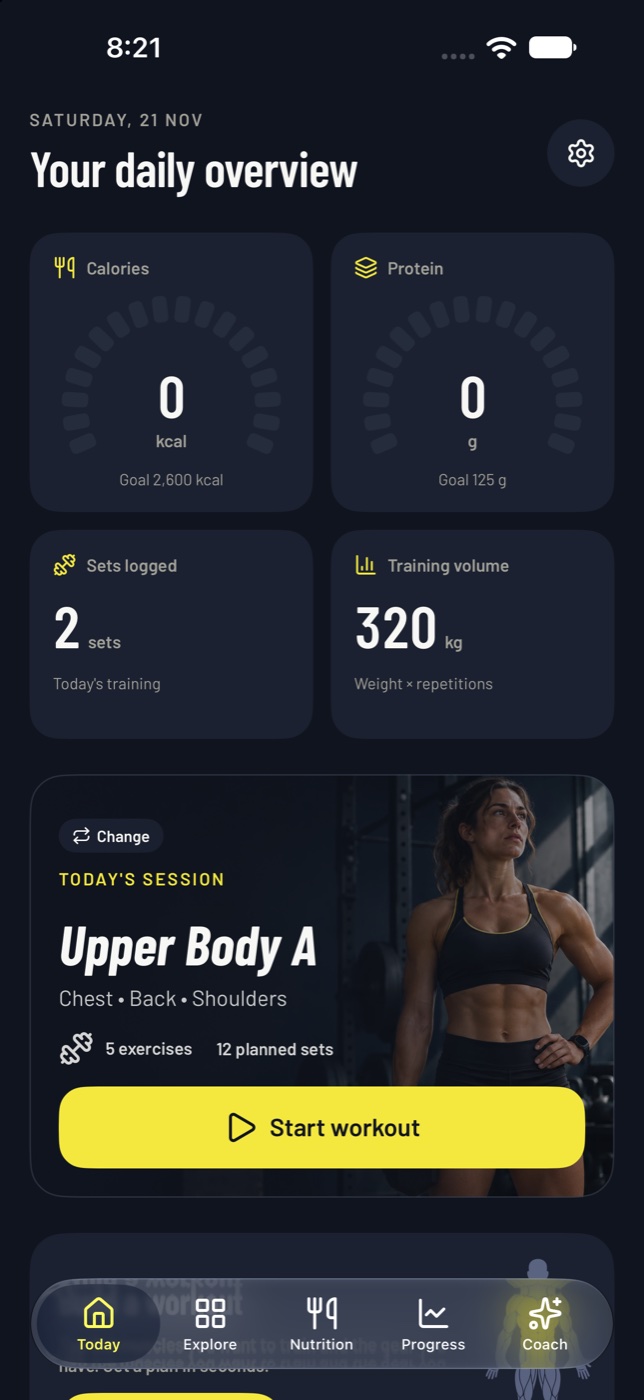
BarbellFit's setup asks what you can train with: dumbbells, a barbell, machines, kettlebells, bands or a pull-up bar. Bodyweight movements are always included, so a plan with nothing ticked is a bodyweight plan. Each movement has an illustration and how-to steps, and your sets are logged the same way as in a gym.
Common questions
Can I build muscle with only push-ups and squats?
At first, yes. To keep growing you need the sets to stay hard, which means harder variations or added load, and you need a pulling movement such as rows or pull-ups for your back.
How many days a week should I work out at home?
Three full-body sessions a week on non-consecutive days is a good start. It trains every muscle often enough and leaves time to recover.
Is a home workout as effective as the gym?
For building muscle as a beginner, it can be. A gym makes it easier to keep adding load, especially for legs and back, so it has the advantage as you get stronger.
What equipment should I buy first for home workouts?
A set of resistance bands and a doorway pull-up bar. After that, a pair of adjustable dumbbells covers most movements.
How long should a home workout be?
Thirty to forty-five minutes is enough if the sets are hard. Length matters less than effort and consistency.
Sources
- Schoenfeld et al. (2017). Strength and hypertrophy adaptations between low- vs. high-load resistance training: a systematic review and meta-analysis. Journal of Strength and Conditioning Research.
- Schoenfeld et al. (2016). Effects of resistance training frequency on measures of muscle hypertrophy: a systematic review and meta-analysis.
This article is general information, not medical advice. Check with a healthcare professional before changing your training or diet, especially if you have an injury or a medical condition.